First-Pass Metabolism and Why Oral Supplements Lose Potency
Oral doses lose potency through liver processing before reaching your bloodstream.
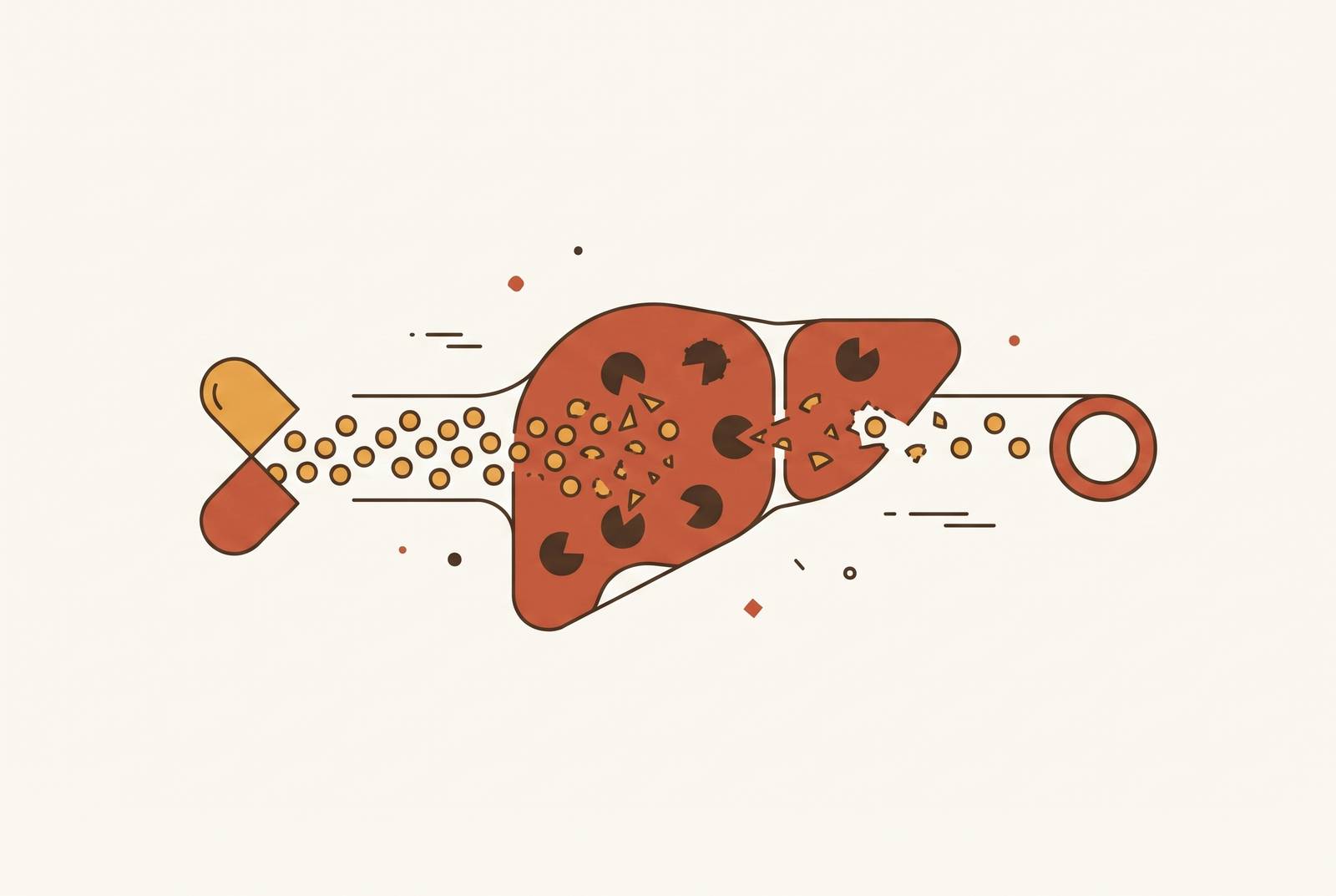
First-pass metabolism helps explain why an oral supplement’s labeled dose is not the dose that reaches your bloodstream. A ready-to-drink cognitive-support shot can be easier to take than capsules, but being liquid does not by itself mean better absorption or faster effects. The stronger choice is a formulation with evidence for its specific ingredients, doses, and delivery method.
What first-pass metabolism actually does to an oral dose
The portal vein takes blood from the gastrointestinal tract directly to the liver before it reaches the wider circulation. Swallowing an ingredient therefore puts the liver upstream of the rest of the body. That route is easy to overlook. A compound absorbed from the gut does not necessarily enter the bloodstream unchanged and travel straight to where it is wanted. It first faces processing in the gut wall and then in the liver.
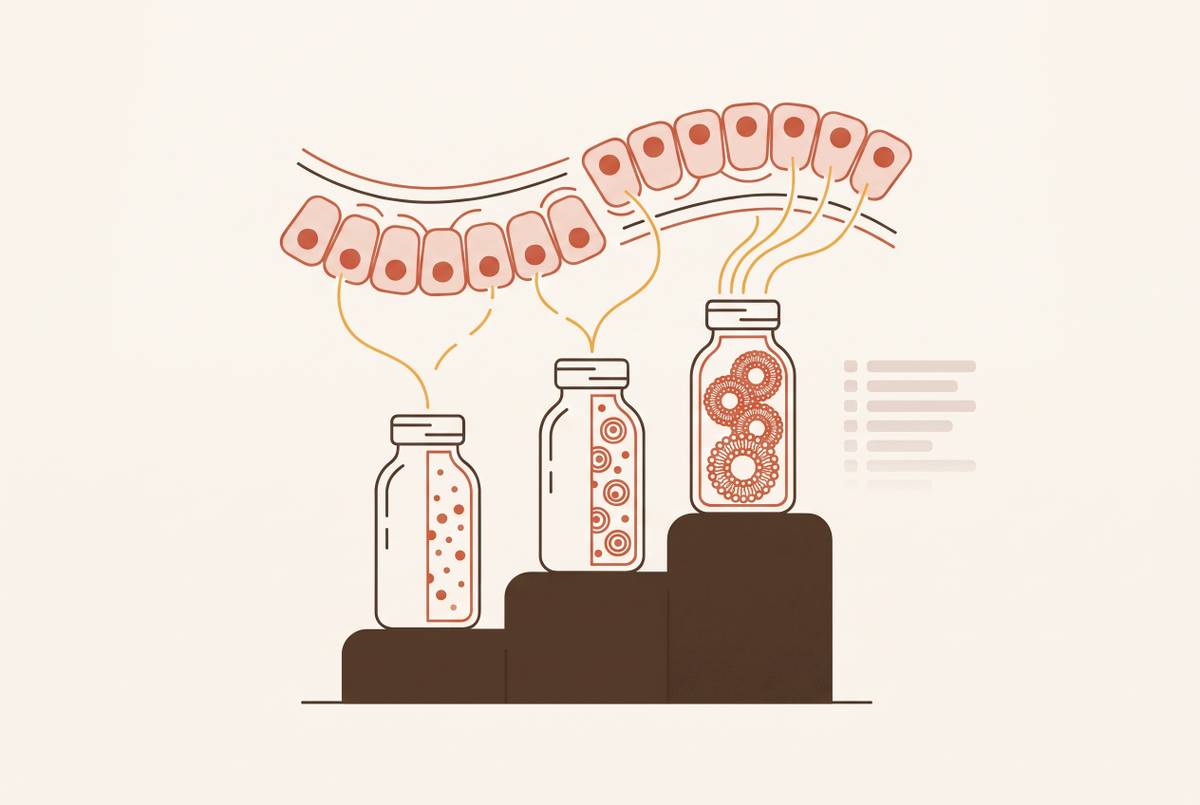
The gut wall is not a passive filter. Enzymes in its lining, including CYP3A4, can metabolize a compound before it enters the portal vein. The liver then processes what is left of the compound after it passes through the gut wall. This second stage is called hepatic extraction, with “hepatic” simply meaning related to the liver. The liver’s high capacity for changing compounds makes this a substantial obstacle for ingredients that are extensively metabolized there.
The total loss depends on three linked factors. These are how much of the dose is absorbed, how much survives gut-wall metabolism, and how much survives hepatic extraction. Poor absorption reduces the amount available before the other losses are counted. The fractions multiply. Each stage acts on what remains, so even modest losses at successive stages can leave much less of the original compound available in the wider circulation.
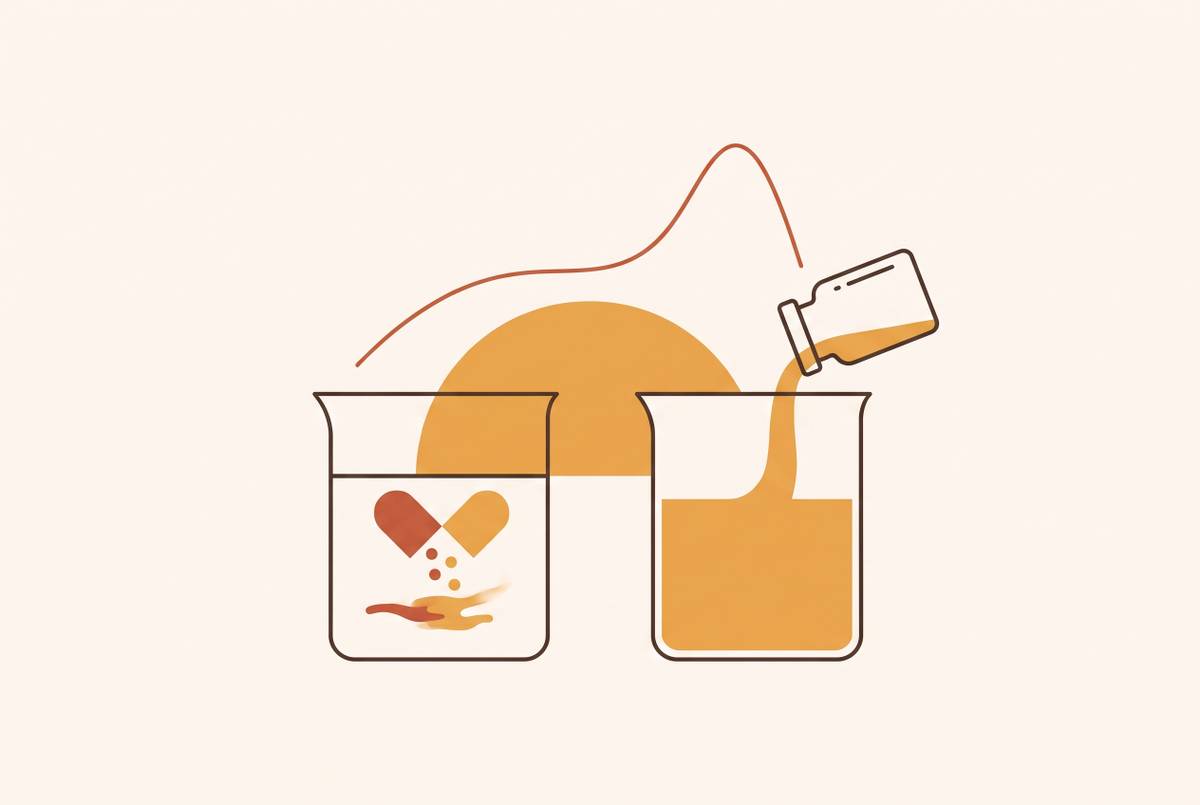
Rashed Ahmed’s 2025 preprint describes this as a central challenge for oral delivery. It explains that compounds with extensive hepatic metabolism can require substantially higher oral doses than intravenous equivalents to achieve comparable systemic levels. The route changes the dose that becomes available. Bioavailability is the term for that availability, and it connects the amount administered to the amount that reaches circulation.
Why the liver's toll is invisible to most supplement buyers
A supplement label states the dose you swallow, leaving the dose that reaches your bloodstream unspecified. Standard packaging does not close that gap for the buyer. A clearly printed ingredient amount can therefore answer one question while leaving another unanswered. It tells you what is in the serving. It does not tell you how much will dissolve, cross the gut wall, and survive first-pass metabolism.
That missing information is not a failure by the reader. Pills and powders are convenient, and oral delivery is the default because it is easy to use. Neither format, by itself, provides a way around the portal-vein route. Without an explanation of the formulation, a buyer has little reason to distinguish the dose inside the product from the dose available to the body. The loss stays out of sight.
Thierry F Vandamme’s 2024 discussion in Pharmaceutics identifies poor water solubility and poor permeability as widespread obstacles in oral delivery of active pharmaceutical ingredients. Solubility concerns whether a compound dissolves, while permeability concerns whether it can cross a barrier. Both can constrain absorption before liver processing begins. However, the extent of the problem still depends on the compound and the formulation.
One response is to increase the labeled dose in pursuit of a useful systemic concentration. That can shift more cost to the buyer and add load on the gut and liver without a proportional benefit. More is not automatically more effective. Vandamme describes improved bioavailability as a way to support lower effective doses, more consistent outcomes, and reduced risk of side effects. The practical distinction is between adding more ingredient and getting more of an appropriate dose through.
How botanical cognitive-support compounds are especially vulnerable to this toll
Botanical cognitive-support ingredients often contain large, complex, poorly water-soluble compounds. Those properties make oral delivery harder before first-pass extraction is even considered. A familiar plant name does not tell the buyer about these limits. Ashwagandha, Bacopa Monnieri, and Rhodiola Rosea each bring different compounds and formulation needs to a product. Treating them as interchangeable powders hides the chemistry that determines their availability.
Ashwagandha provides a specific example through its withanolides. Research published in 2025 identifies poor solubility of withanolide aglycones, the non-glycoside forms, as a limit on bioavailability. The same research identifies withanolide glycosides as the more bioavailable form. An ashwagandha amount on a label therefore does not, by itself, explain which forms are present or how readily they become available.
Bacopa’s bacosides illustrate why duration and measured outcomes also need attention. They require sustained daily use before meaningful accumulation. Lopresti and Smith’s 2025 randomized controlled trial found that taking 300 mg daily for 12 weeks reduced stress and fatigue, but made no significant difference in cognitive performance versus placebo. Slow or incomplete absorption is consistent with limited systemic exposure, but that result alone does not establish absorption as the cause of the cognitive findings.
Multiple randomized controlled trials of standardized extracts at 200–400 mg report fatigue-reduction and cognitive benefits under stress, with acute onset at 30–45 minutes. That onset depends on adequate absorption, which in turn depends on formulation. It is not a promise attached to every rhodiola product.
What the clinical research is actually testing versus what most products deliver
A clinical trial tests a specific formulation under set conditions. Choosing a standard capsule containing the same named botanical requires checking its equivalence to the extract used in that trial. Evidence for an ingredient can support a product only to the extent that the product matches the features that shaped the result. Those features include extract standardization, dose, duration, and, where specified, delivery method.
Thanawala’s 2026 randomized controlled trial tested a sustained-release ashwagandha formulation in 135 participants. Doses of 150 or 300 mg once daily for 60 days significantly improved stress levels, sleep quality, and psychological well-being. The sustained-release design was part of the tested formulation. It was intended to change delivery over time. That result does not establish that an ordinary capsule with the same milligram amount will produce the same outcome.
The 2025 meta-analytic findings on ashwagandha also report significantly reduced perceived stress and cortisol levels at 8 weeks. Those findings support the studied uses, but they do not erase differences between extracts. Delivery remains part of the comparison. Consistent systemic availability is needed for the active compounds to contribute to the result, while a generic ingredient name tells the buyer little about that availability.
A 2025 double-blind crossover trial published in the British Journal of Nutrition makes the importance of dose and combination especially clear. It tested 200 mg L-theanine with 160 mg caffeine in sleep-deprived adults and found that the combination significantly improved their selective attention and target-distractor discrimination. That is a specific combination in a specific setting. It is not evidence that any amount of either ingredient, in any cognitive-support product, will do the same.
The objection is simple enough to understand. If an ingredient worked in a trial, why would it not work in a capsule? A capsule can deliver a studied formulation, but the capsule itself does not establish equivalence. A lower-concentration extract, a different molecular profile, or an unresolved solubility problem can break the comparison. Compare what was tested with what is sold, without dismissing supplementation as a whole.
The delivery strategies pharmaceutical science uses to reduce first-pass loss
Nanoencapsulation places an ingredient inside very small carrier particles. Vandamme identifies nanoparticles, liposomes, and nano-emulsions as approaches to improving solubility, stability, and cellular uptake. These approaches can help poorly water-soluble compounds become available for absorption. Their role is more than cosmetic. However, better absorption and bypassing liver extraction are different achievements, so evidence for one should not be read as proof of the other.
Lipid-based delivery uses fats as part of the ingredient’s delivery system. Some lipid-based formulations can send a compound into the lymphatic system instead of the portal vein as it is absorbed, so it avoids the liver’s initial extraction along that route. Quach and colleagues’ 2022 work demonstrated this mechanism with triglyceride-mimetic prodrugs. That finding concerns a deliberately engineered formulation. It does not show that every ingredient mixed with fat, or every lipid-based supplement, takes the same route.
Self-emulsifying drug delivery systems, or SEDDS, form fine emulsions in the gastrointestinal tract. Vandamme describes these systems as a way to promote absorption of poorly water-soluble compounds. Their purpose is to address a specific delivery obstacle. This makes them relevant to botanical extracts with solubility problems, although relevance is not the same as proof for a finished product. The formulation still needs to suit the compounds it contains.
With sublingual delivery, a compound is absorbed through the tissue under the tongue. Roon’s 2026 account describes how this thin, highly vascular tissue provides access to systemic circulation without the gut-wall and portal-vein passage. Onset can be measured in minutes rather than the one-to-two-hour delay typical of swallowed capsules. The route is the key distinction here. A drink that is swallowed does not become sublingual simply because it is liquid.
Prodrug design uses an inactive precursor that the body converts into an active compound. Ahmed describes how hepatic metabolism can perform that conversion, turning first-pass processing into a useful step. This is a different strategy from avoiding the liver.
What to look for in a supplement formulation designed to actually deliver its ingredients
For a reader choosing a supplement, the first question is whether its delivery method addresses a known constraint of its ingredients. Lipid-based encapsulation, nanoparticle technology, sustained-release design, and liquid or emulsion formats can have useful roles. None is a universal guarantee. A credible explanation connects the method to a specific problem, such as poor solubility or substantial first-pass extraction. It also distinguishes a claim of better absorption from evidence that demonstrates it.
The ingredients also need to match the clinical literature. That means looking for standardized concentrations. Transparent, individually listed doses make this comparison possible. With proprietary blends, the buyer may have no way to tell whether the product contains the dose that was studied. Even a promising delivery method cannot clear up doubts about what is in the serving.
Third-party contaminant testing should also be part of this check. Better absorption is not a benefit if it comes with an unknown load of heavy metals, mycotoxins, or other residuals. Testing and delivery answer different questions. One addresses what else may be in the formulation, while the other addresses how its ingredients become available. Neither replaces evidence for the product’s intended benefits.
For people tired of swallowing capsules every morning, a ready-to-drink format is easier to take. Whether it actually delivers the studied compounds more effectively is harder to establish. A claim of faster onset needs evidence tied to that formulation. A claim of reduced hepatic extraction needs a mechanism that changes that part of the journey. Without that distinction, the buyer is being asked to infer performance from packaging.
The ingredients, their concentrations, their doses, and their delivery method should form a coherent match to the evidence being cited. A liquid can meet that standard, and a capsule can too.