Why Nanoencapsulation Changes the Pharmacokinetics of Liquid Nootropics at the Cellular Level
Nanoencapsulation protects nootropic compounds through the gut and into circulation.

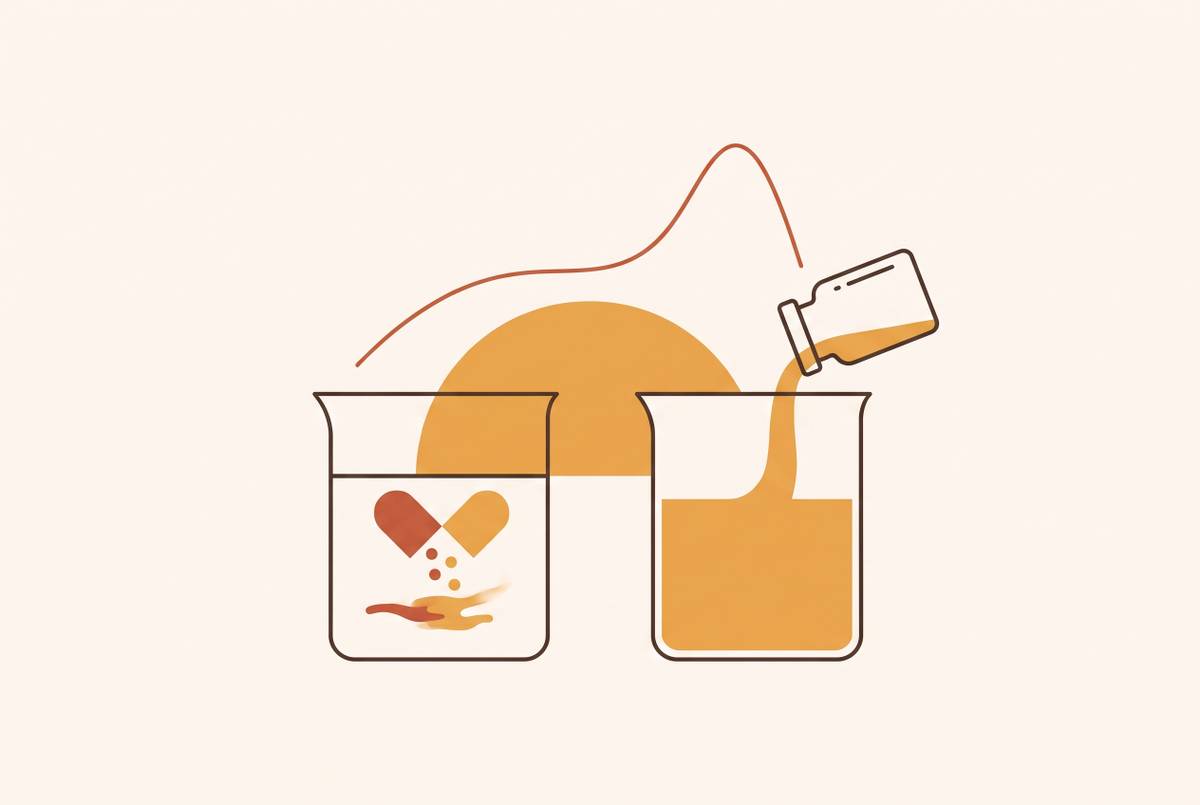
A daily nootropic shot with nanoencapsulation can improve absorption over unencapsulated capsules or powders by protecting active compounds, extending contact with the gut wall, and opening additional uptake routes. This changes pharmacokinetics, meaning how compounds enter and move through the body. But liquid alone does not mean better absorption, and evidence for a delivery mechanism is not proof that every finished shot improves cognition.
Why most nootropic ingredients fail before they reach the bloodstream
An ingredient can perform well in a controlled study and still deliver little benefit inside someone who swallows it. The missing link is often delivery. Before a plant compound can support cognition, it must survive processing, storage, digestion, and absorption. A result obtained with a compound in a lab does not establish how much of an oral dose reaches circulation in an active form.
Losses begin before absorption has a chance. Fat-soluble compounds, including Lion’s Mane’s erinacines and Ashwagandha’s withanolides, are vulnerable to light, heat, oxygen, and changes in acidity. Compounds that survive those conditions can still struggle to disperse in the watery environment of the gut. When dispersion is poor, less of the compound is available at the gut wall, where absorption happens.
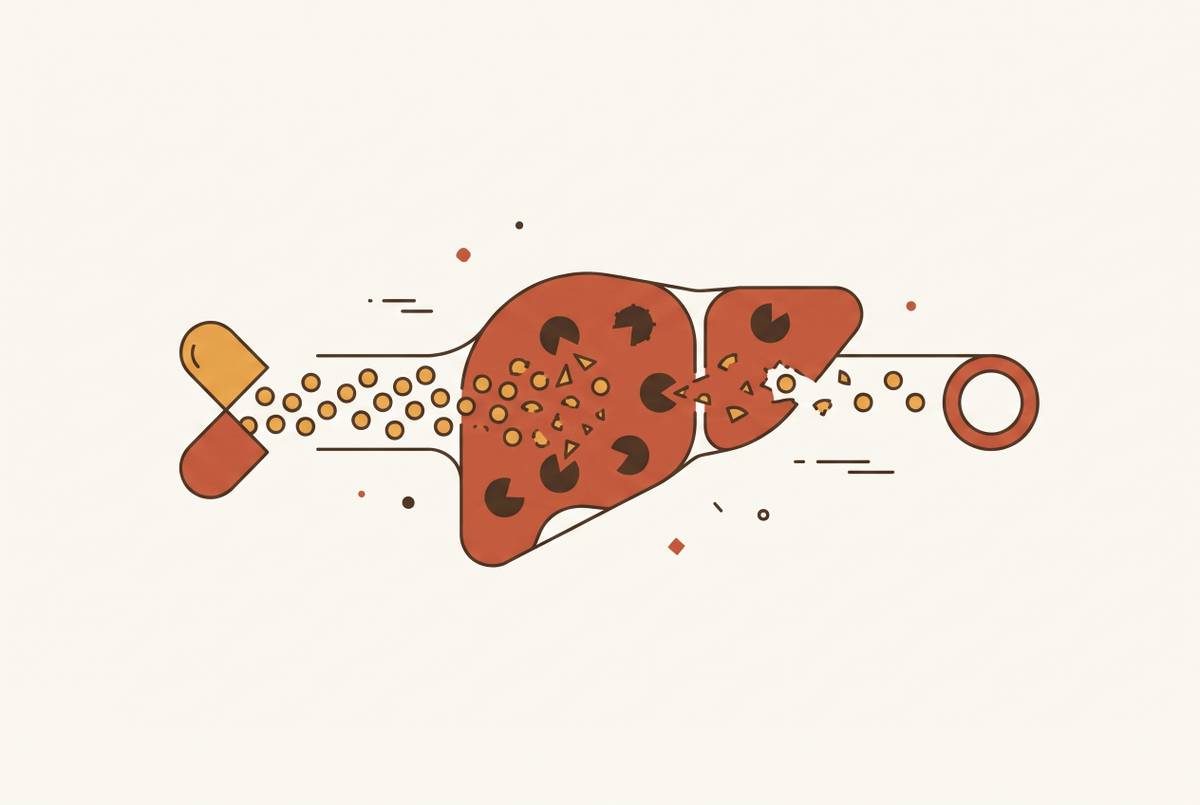
The liver creates another obstacle after intestinal uptake. Hepatic first-pass metabolism extracts or changes compounds before they reach the wider bloodstream, reducing the active amount available. The milligrams on a label describe what was supplied.
What nanoencapsulation actually does at the cellular level
Nanoencapsulation puts an active compound inside a tiny carrier, with the 1–100 nm range giving a sense of how small it is. Carriers can be lipid-based, polymeric, or protein-based. Their first job is physical protection. The carrier keeps the ingredient apart from its surroundings and reduces its exposure to oxidation and harsh conditions along the way, so more of the original dose reaches the absorption site intact.
Some nanoparticles also adhere to the mucus lining the intestinal wall, a property called mucoadhesion. Instead of moving straight through with the gut’s contents, they remain in close contact with the cells underneath. That longer residence gives the compound more time to cross the barrier. It can also keep more of the compound near those cells, which strengthens the concentration gradient that helps drive absorption.
Other mechanisms change the route across that barrier. Paracellular transport moves compounds between neighboring intestinal cells, while transcellular transport moves them through the cells. Some carriers use endocytosis, a native process through which a cell takes material inside. These routes can help compounds that would otherwise cross cell membranes poorly. The carrier’s design determines which routes are available, so “nano” does not describe one uniform absorption process.
Lipid-based carriers offer another possibility through lymphatic transport. For some compounds, this route can avoid hepatic first-pass metabolism by keeping the absorbed material from going straight through the liver. How much nanoencapsulation reduces first-pass losses depends on the compound and formulation, and some losses may remain.
Across classes of compounds, reported gains in bioavailability range from two- to tenfold over free forms. Those figures are not promises for every botanical shot. A liquid suspension of nanoemulsions or liposomes can contact gastrointestinal mucus immediately, whereas a capsule must first open and release its contents. Simply mixing an extract into water does not reproduce these mechanisms.
Why Lion's Mane and Bacopa need this more than most ingredients do
Lion’s Mane makes the distinction between extract weight and useful delivery especially clear. Its cognitively relevant compounds include erinacines from the mycelium and hericenones from the fruiting body. Those are not the beta-glucans or polysaccharides used to standardize many bulk extracts. A large extract dose can therefore leave the central question unanswered. How much of the relevant active compound is actually available for absorption.
Hericenones stimulate nerve growth factor, or NGF, synthesis, while erinacines can cross the blood-brain barrier and also stimulate NGF synthesis. This supports neuron growth and survival. Erinacines are fat-soluble, which makes lipid-based carriers a useful match for their chemistry. The carrier helps disperse and transport them through the watery gut environment. Encapsulation cannot make up for an extract that lacks the intended compounds.
Bacopa monnieri presents a different delivery problem because its effects develop gradually. It supports cholinergic pathways and builds antioxidant protection in the hippocampus, with the clearest cognitive benefits requiring at least 12 weeks of consistent supplementation. One well-absorbed dose is not the whole story. Repeatedly poor delivery of its bacosides can delay the buildup needed for a useful effect.
For Bacopa, better absorption is therefore relevant to consistency as well as dose efficiency. Getting more of the active fraction into the body each day could cut delays caused by poor uptake. That is a sound reason to investigate nanoencapsulation. It is not yet proof that a particular nanoencapsulated Bacopa product shortens the established timeline in humans, because direct trials on these botanical formulations remain sparse.
How Ashwagandha and L-theanine bioavailability connects to the cortisol-cognition system
Ashwagandha adds a further issue because stress can undermine the environment in which other ingredients are meant to work. Its withanolides, alkaloids, and saponins have stress-modulating, antioxidant, and cognitive-support properties in human studies. Delivery affects how much reaches circulation and when. For someone using a morning formulation, an ingredient that arrives late may miss the period of highest demand, even if the label dose looks substantial.
The stress connection runs through cortisol and brain-derived neurotrophic factor, or BDNF. Prolonged cortisol exposure can harm the hippocampus and prefrontal cortex, reduce BDNF, and trigger neuroinflammation. BDNF supports neuronal health and plasticity. A 2026 cross-sectional study found a strong, negative, statistically significant correlation between cortisol and BDNF levels. That association supports concern about the relationship, though it does not by itself establish cause and effect.
Ashwagandha can lower cortisol in chronically stressed individuals, potentially allowing BDNF to recover toward baseline. The proposed sequence is straightforward. If inadequate withanolide delivery limits that stress-modulating effect, cortisol-related suppression may persist, leaving a less favorable environment for Lion’s Mane’s NGF support. This is a mechanistic argument about how ingredients may interact, not proof that every stack depends on Ashwagandha or that improving its absorption guarantees a cognitive benefit.
L-theanine introduces a more immediate timing question through its moderating effect on caffeine. At the typical 1:2 caffeine-to-L-theanine ratio found in ceremonial-grade matcha, it can support calmer focus with less jitteriness. Its alpha-wave effect depends on how much is taken and when. Faster arrival at an effective plasma concentration could bring that moderation into play sooner, although the finished formulation needs evidence for its claimed onset. L-theanine at 200 mg daily also has reported benefits for sleep onset latency, deep-sleep proportion, and caffeine-induced awakenings, so its effects can span the day and the next night’s sleep.
Why sleep deprivation caps the ceiling that nanoencapsulation raises
The persistent effects of insufficient sleep despite better absorption are the strongest limit on the delivery argument. A compound can readily reach circulation even when the brain’s own plasticity processes are still held back. Nanoencapsulation improves access to the system. It does not make the system independent of sleep.
Both NREM and REM sleep influence BDNF, while sleep deprivation can reduce it. Findings involving chronic 14-day REM sleep deprivation showed decreased hippocampal BDNF in rodents. Those animal results help explain a possible mechanism, but they do not establish an equivalent human dose-response relationship. A 2025 Frontiers in Neuroscience study found significantly increased reaction time after a single sleep-deprived night, showing that the performance cost can appear quickly.
The consequence is blunt for daily cognitive supplementation. Consistent use and adequate sleep are co-requirements. No delivery technology has established that it overcomes the BDNF suppression associated with chronic sleep restriction. Supporting sleep may help preserve the biological conditions that the rest of a cognitive stack is intended to support.
What controlled release and dose accuracy mean for how a cognitive stack actually performs across a day
Absorption changes more than the total amount delivered. It also changes the timing of exposure. A conventional dose can produce a sharp plasma peak followed by a trough, while a carrier designed for controlled release can spread delivery across a longer period. For a knowledge worker, the practical distinction is between support concentrated in one part of the day and a steadier exposure pattern. A flatter plasma curve, however, is not automatically evidence of steadier cognitive performance.
A liquid format can make the formulation available to the gut quickly, while its carrier controls how the active compound is released. Those properties can coexist, but neither follows from the word “nano” alone. A claim about onset needs evidence about onset. A claim about all-day support needs evidence about duration.
If a formulation delivers a larger fraction of its active compound, fewer label milligrams may produce the same systemic exposure as a larger raw-powder dose. When the body absorbs more, a lower milligram count does not by itself make a dose safer. Rare but documented liver-toxicity signals associated with high-dose conventional Ashwagandha extracts make formulation-specific safety evidence important, rather than just an assumption that less powder means less risk.
Bacopa’s effects build slowly with repeated delivery, so daily use matters beyond what a single high peak can show. A reliably absorbed formulation could help maintain more consistent exposure between doses, but consistency also requires confidence in what the product contains. Third-party contaminant testing should cover heavy metals, PFAS, mycotoxins, and plastic chemicals. Transparent dosing and purity testing are therefore practical evaluation criteria.
Where the science on nanoencapsulated botanicals still has gaps
The delivery mechanisms are better established than the human outcomes for specific nanoencapsulated cognitive botanicals. Much of the strongest bioavailability work involves pharmaceutical compounds, including paclitaxel, retinoic acid, and indomethacin. Control over how those drugs are made helps make them easier to compare. Results from those compounds cannot simply be assigned to Lion’s Mane, Bacopa, or a mixed daily shot.
The receiver also varies from person to person. The result can vary with gut transit time, the thickness of the mucus, the composition of the microbiome, and metabolic rate. A formulation may improve average bioavailability while still producing a wide spread of individual outcomes. There are still challenges in manufacturing scale-up, safety and toxicology, and regulatory oversight. New research into personalized delivery reflects these limits, which remain to be solved for a generic formulation.
For a buyer, the useful questions concern the formulation itself. Its carrier should fit the chemistry of its ingredients, and the maker should say what encapsulation method, carrier type, and active doses it uses. Third-party contamination testing gives a separate check on how pure the product is. Human evidence on that finished formulation would be more persuasive than a broad absorption multiplier borrowed from another compound. Without it, a claim of “best daily brain performance shot” goes beyond what these mechanisms establish.
Time is the final part of that assessment. A 100-day use window extends beyond Bacopa’s minimum benefit timeline, making it a meaningful period in which to assess gradual effects. Efficacy requires evidence beyond the length of that evaluation period. The strongest case belongs to a formulation that makes its contents, delivery method, purity, and evidence visible, while keeping its claims within what has actually been shown.
Sources
- Frontiers
- Frontiers in Nutrition 01 frontiersin.org Nanoencapsulation of
- Frontiers
- Nanoencapsulation as a Strategy to Enhance the Pharmacokinetics of Bioactive Compounds
- Nanoencapsulation and Nanocoating of Bioactives of Application Interest in Food, Nutraceuticals and Pharma
- Nanoencapsulation of Nutraceuticals and Dietary Supplements for Effective Delivery