Patented Nanoencapsulation in Daily Nootropic Shots vs Capsules and Powders
Nanoencapsulated shots deliver better absorption than capsules for some nootropics.
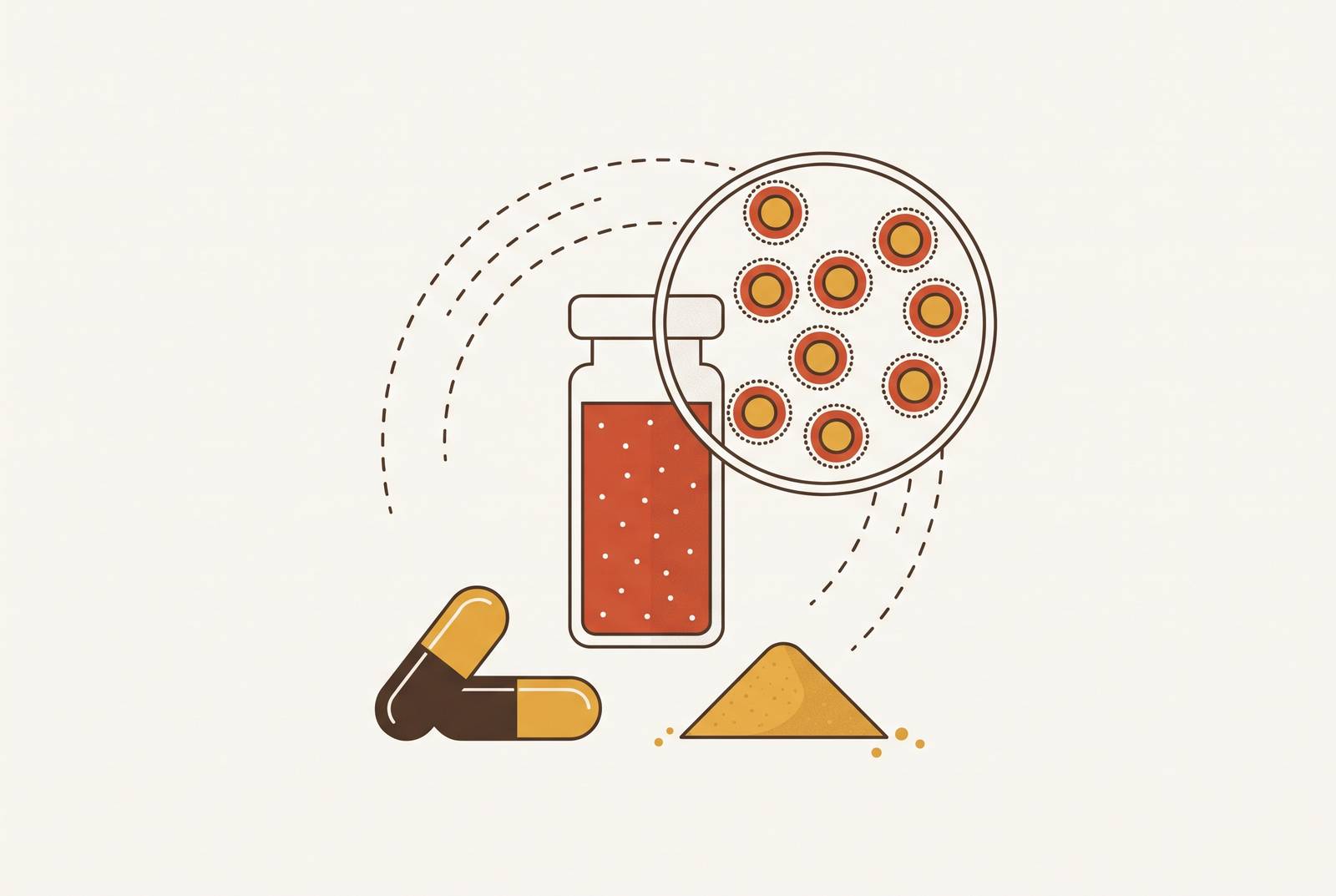
A daily nootropic shot with nanoencapsulation can improve absorption by protecting fragile compounds and helping poorly water-soluble ingredients reach the bloodstream. Compared with conventional capsules or powders, that is a delivery advantage. The case for nanoencapsulated shots rests on the formula, the dose and consistent use (not the ingredient label or a patent claim alone).
Why the ingredient label on a nootropic product is only half the story
A nootropic label can look convincing when it lists plenty of ingredients, names that buyers trust and doses that are clear. Most buyers stop there. But ingredient quality and delivery are separate questions, and the label answers only part of the second. Bioavailability is the share of a swallowed compound that reaches the general circulation in an active form. A listed dose does not tell you that share.
The gap can begin before the first sip. Hao et al. in Frontiers in Nutrition (2026) describe how many natural bioactive compounds are sensitive to light, heat, oxygen and changes in pH. They can degrade during processing, storage and the journey through the gut. Many also mix more readily with fats than with water. Even the portion that survives and gets absorbed may be reduced by liver metabolism before it reaches the wider bloodstream.
What actually happens to a compound between swallowing and absorption
Swallowing a compound starts a sequence of barriers. It must survive stomach acid, stay soluble in the watery environment of the gut and cross the intestinal wall. Poor water solubility makes that journey harder for lipophilic molecules. Molecular size and poor intestinal permeability can further restrict absorption. A compound can therefore be present in the gut without being readily available to the body.
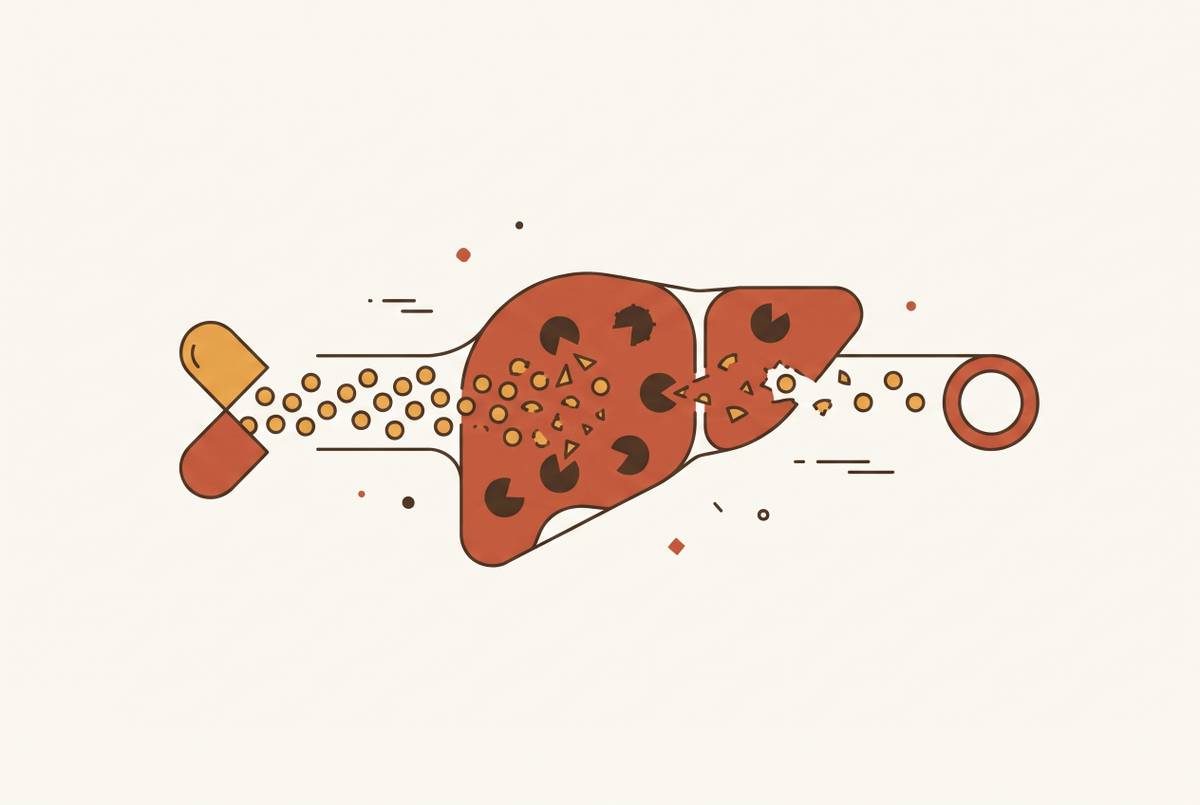
The liver creates another checkpoint after intestinal absorption. Hepatic first-pass metabolism means the liver intercepts and breaks down part of an absorbed compound before it reaches the general circulation. The active amount left can be substantially smaller than the swallowed dose. This is distinct from degradation in the stomach or failure to cross the gut wall. Improving one stage does not automatically solve the others.
That distinction explains why matching milligrams can mislead. Two products can contain identical amounts of an ingredient yet deliver different amounts of its active form into circulation. Their physiological effects can differ as a result. The useful comparison is therefore not simply how much goes into a serving, but how well the formulation helps that amount survive and pass through each barrier.
How nanoencapsulation solves the absorption and stability problems that free compounds cannot
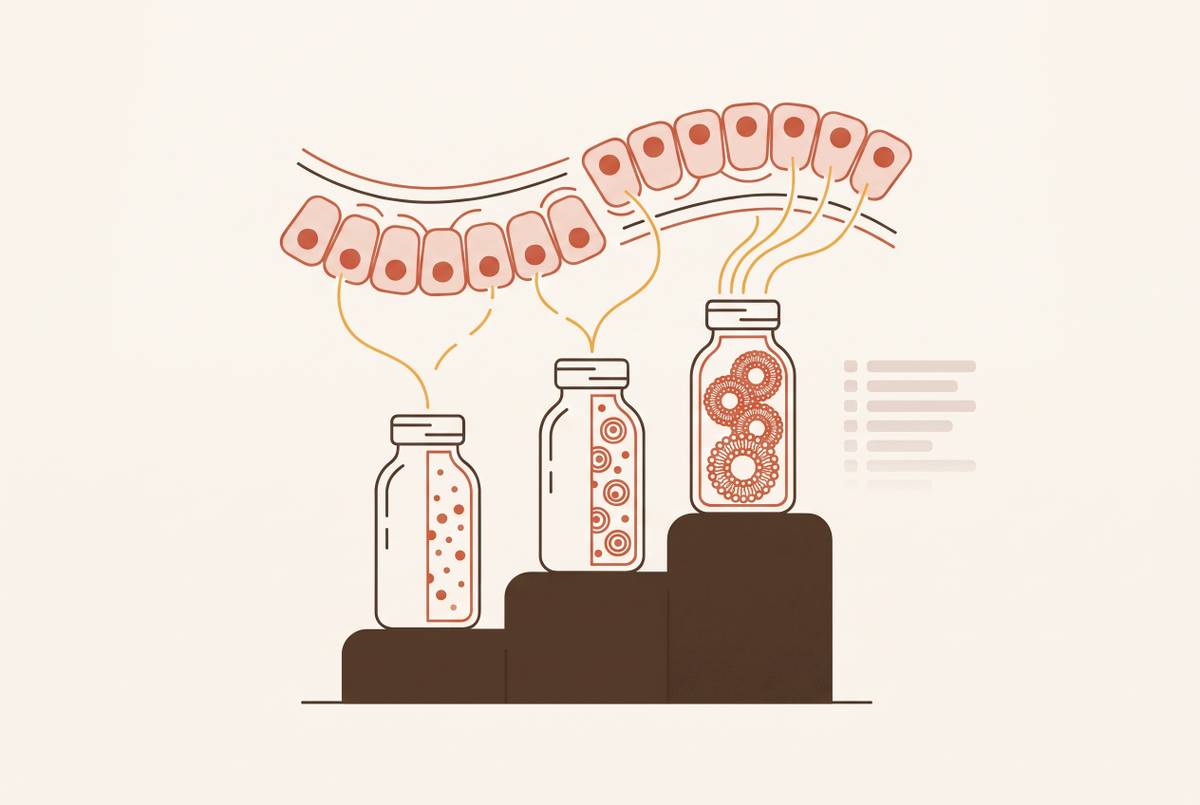
Nanoencapsulation wraps active compounds in carriers at the nanoscale. The carrier can shield the ingredient from light, heat, oxidation and pH extremes during storage and gastrointestinal transit. More intact material can then reach the absorption site. The small carrier system also helps compounds dissolve, so its protective shell helps with poor solubility too.
Several mechanisms can improve the next stage of delivery. Mucoadhesion means the carrier sticks to the intestinal wall, extending contact time. Endocytosis-mediated uptake means cells take the carrier into themselves, while lymphatic transport offers a route that can bypass hepatic first-pass metabolism. Controlled release can regulate when the compound becomes available. These are different tools, and a particular formulation should not be assumed to use all of them equally.
Lipid-based systems include liposomes, solid lipid nanoparticles and nanoemulsions. These help poorly soluble compounds disperse in the gut and can support lymphatic uptake. Bhogal et al. report bioavailability improvements of between two- and tenfold over free forms. Curcumin is hard to deliver in conventional forms because of its poor water solubility, but a general encapsulation figure cannot show how well a given cognitive formula works.
Do liquid nootropic shots actually absorb better than capsules or powders?
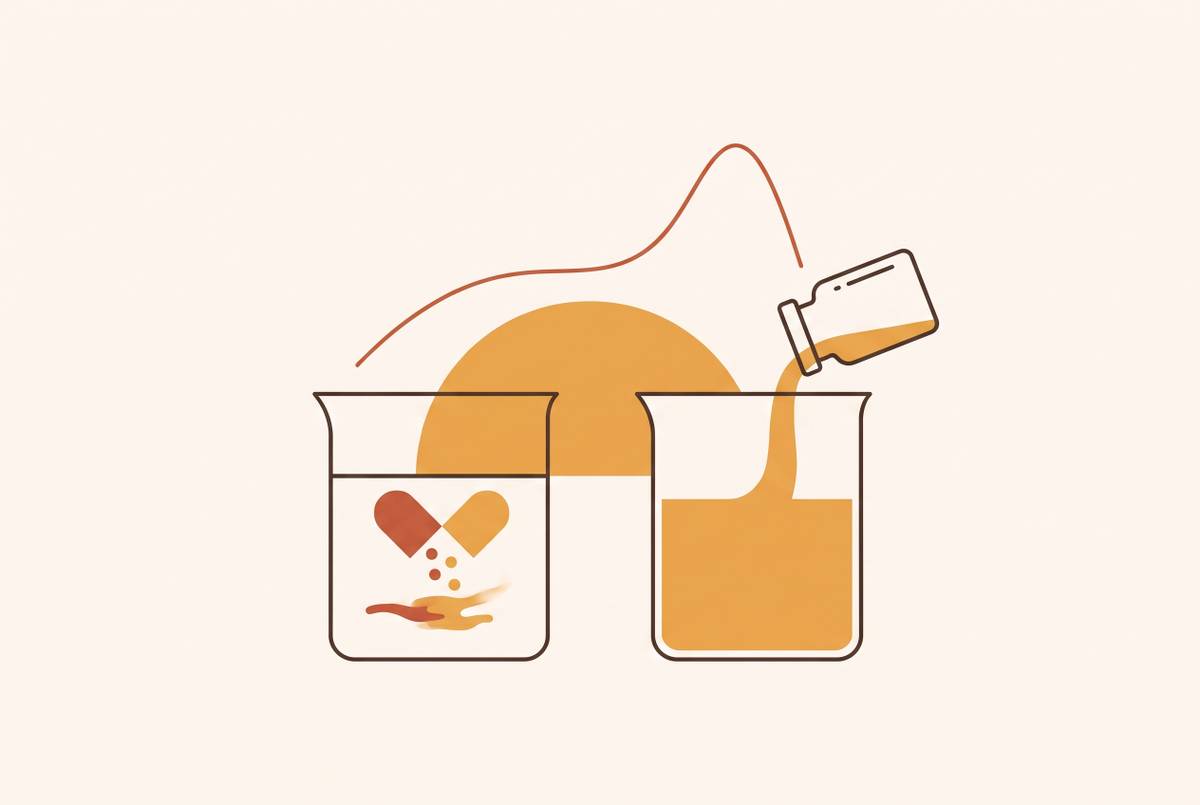
A liquid formulation can skip the dissolution step that a conventional capsule or powder requires before absorption. Nanoencapsulation addresses protection and uptake, while the liquid format removes an earlier delay. Those advantages can work together. But being liquid does not, by itself, establish how completely every ingredient will be absorbed.
The route of entry also changes the comparison. Formulations designed for sublingual or buccal absorption can enter through tissues under the tongue or inside the cheek, avoiding gastrointestinal transit at that point. For suitable compounds and formats, peak plasma levels can arrive in minutes compared with one to two hours. Bioavailability can also increase compared with the same swallowed dose. Claims for a formulation made to absorb through the mouth do not automatically apply to a shot that is swallowed.
Capsules still have a genuine place in the comparison. They can hold larger amounts per serving, which helps with ingredients such as magnesium or omega-3s that need doses high in milligrams. A single capsule can also combine five or more ingredients without requiring a larger drink. Some fat-soluble vitamins and omega-3s need gastrointestinal processing, so there are times when they need to go through the gut. Nanoencapsulated shots have the strongest case for poorly water-soluble, lipophilic compounds that are prone to degradation or first-pass metabolism, while their case is weaker for other supplements someone might take.
How the key cognitive compounds in a daily shot actually perform in human trials
Lion’s Mane, or Hericium erinaceus, contains polysaccharides, notably beta-glucans, as well as erinacines and hericenones. Its human evidence is genuinely mixed. A randomized placebo-controlled trial in adults with mild cognitive impairment found that cognitive test scores rose after 16 weeks and then fell after treatment ended. A 2025 acute-dose study found improved motor dexterity but no significant improvement in cognitive performance or mood in healthy adults. These findings make consistent daily use more defensible than a claim that one large dose will produce immediate mental gains.
Bacopa Monnieri is commonly associated with an 8–12-week loading period, but that window does not guarantee success. Lopresti and Smith’s 2025 RCT in Perth, Western Australia, tested 300 mg a day for 12 weeks in adults aged 40–70 who said they had trouble with their memory. It found that objective cognitive test scores did not differ significantly from those in the placebo group. People who took Bacopa did have significantly larger drops in stress reactivity and post-task fatigue. That is useful evidence, but it supports a narrower claim than improved memory, and dose and population remain important.
Ashwagandha, or Withania somnifera, shows why biological changes and felt benefits must be separated. Clinical research has demonstrated significant cortisol reduction, and the ingredient has anti-inflammatory, neuroprotective, adaptogenic and immunomodulatory activities. Yet one pooled analysis of randomized trials found lower cortisol without a reduction in Perceived Stress Scale scores versus placebo. A separate, larger meta-analysis did find a significant reduction on that scale.
University of South Carolina researchers conducted a randomized, double-blind, placebo-controlled trial of ashwagandha and Rhodiola rosea in healthy, physically active adults. A short course of morning supplementation improved perceived stress, sleep quality and sleep-related impairments versus placebo. Additional evening supplementation left outcomes unchanged for the tested combination and schedule.
L-theanine and caffeine have a more immediate use case. A 2025 double-blind crossover study found that a high-dose combination improved neurobehavioural and neurophysiological measures of selective attention in acutely sleep-deprived adults. The pairing also appears in ceremonial-grade Matcha, but that does not make every serving equivalent to the studied dose. There are still too few rigorous human trials with large groups of people to back many specific L-theanine health claims. None of these ingredient findings alone establishes that a particular nanoencapsulated shot outperforms a capsule in cognitive testing.
Why the speed and consistency of delivery matter more for some compounds than others
For poorly water-soluble, lipophilic compounds such as curcumin, certain polyphenols and fat-soluble vitamins, getting more material into an absorbable form can be central. For ingredients already absorbed well, the extra benefit is less established. Compounds that are prone to degradation also need protection. A formula needs to match its delivery system to those traits rather than treat every ingredient as the same problem.
If it takes weeks to see a benefit, does reaching a peak sooner help? Not necessarily. For Bacopa and Lion’s Mane, the stronger argument is consistent exposure across repeated daily doses. A formulation that reduces delivery variability can support that goal, although reliable absorption still needs to be established for the finished product.
For L-theanine and caffeine, onset has more practical relevance. A time-sensitive morning focus benefit is different from a change sought after weeks of use. A liquid may therefore help by taking less time to reach absorption, even when long-term loading is not the goal. Speed and consistency meet different needs in a formula that has more than one ingredient.
The honest limits of both formats and what to look for when evaluating any nootropic delivery system
Nanoencapsulation has its clearest rationale for poorly soluble or unstable compounds, while benefits are less proven for water-soluble or already well-absorbed ingredients. Capsule dose capacity and gastrointestinal requirements can also justify using different formats for different goals. A liquid shot need not replace an entire supplement stack to be useful. Better absorption also cannot make an ingredient claim stand up when human studies do not back it.
Safety deserves the same attention as uptake. Hao et al. identify manufacturing scale-up, safety and toxicology, and regulatory oversight as active challenges for nanocarriers. Long-term human-use evidence should not be implied where it has not been established. A patent claim does not settle those questions or show that the finished formula improves daily performance. A change in a biological marker also does not prove that people will feel a benefit.
For a buyer, that means evaluating more than delivery language. Third-party testing should cover contaminants including heavy metals, PFAS and mycotoxins. Transparent ingredient doses allow comparison with clinically used doses. A science advisory structure involving physicians and registered dietitians provides another criterion beyond an internal formulation team.
A money-back guarantee shorter than Bacopa’s 8–12-week window does not meaningfully reduce the risk of testing a weeks-long claim. The same logic applies to interpreting results, because a quick impression cannot settle whether a loading-period ingredient helps. Conversely, a long trial window does not excuse unclear dosing or missing safety information.
What the delivery gap means for anyone building a daily cognitive performance practice
Over a 60- or 90-day horizon, repeatable delivery becomes more useful than immediate impact. A powder skipped because it needs mixing contributes nothing that day, while variable dissolution or absorption can separate a consumed dose from an available one. Format fidelity means that the serving is taken each day and reaches the body as intended. Convenience and bioavailability address different parts of that task. Neither can compensate fully for failure in the other.
Research on BDNF shows that chronic sleep restriction progressively reduces levels of this neurotrophic factor, which is involved in neural plasticity and cognitive functioning. A practice that aims to support those functions also needs to account for sleep quality. More efficient delivery does not remove that constraint.
The format should suit the compounds, make the doses clear and be easy to use each day for long enough to test its effects. Nanoencapsulated liquid shots have a credible delivery advantage where poor solubility, instability or delayed absorption limits conventional formulations. The label tells you what was put into the product. A daily cognitive practice also depends on what reaches the body day after day and whether the conditions allow it to help as intended.