CYP1A2 Genetics and Individual Caffeine Sensitivity
Your genes largely determine whether caffeine sharpens your focus or makes you jittery.
One person drinks an espresso before a presentation, and the room sharpens into focus. Another drinks the same shot, at the same dose, and spends the next two hours with a racing pulse and a mind that won't settle on the task in front of them. Caffeine is the most widely consumed psychoactive substance in the world and one of the most promising tools for enhancing cognitive function, yet its effects on any one person are genuinely unpredictable unless you know that person's genetic profile. The inconsistency people chalk up to coffee quality, timing, or how much they ate that morning is real but secondary. It sits on top of a fixed genetic architecture, set at birth, that governs how caffeine moves through the body and brain, and the gene at the center of that architecture is CYP1A2.
How CYP1A2 controls the speed at which your body clears caffeine
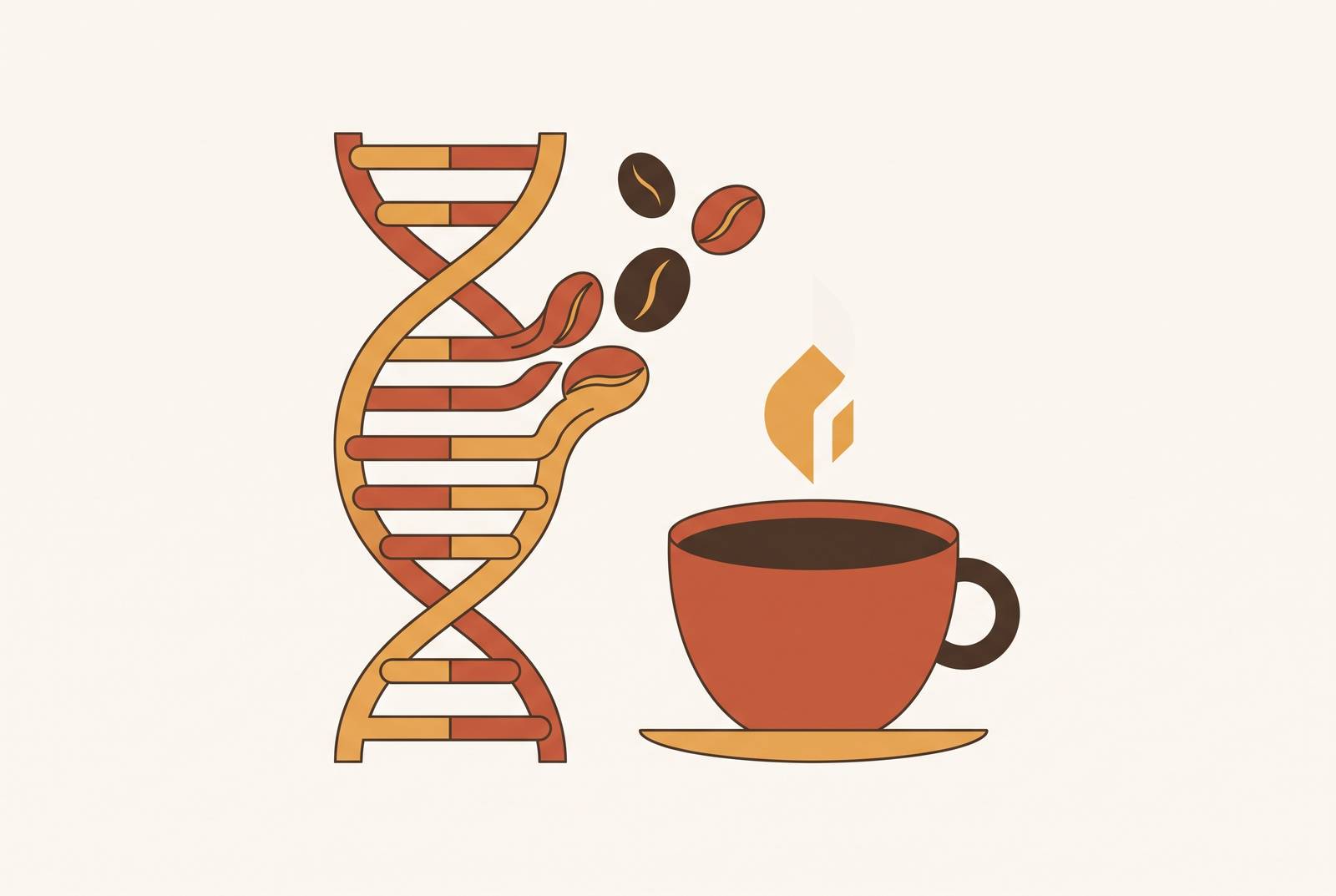
More than 95% of caffeine gets metabolized by the cytochrome P450 1A2 enzyme, encoded by the CYP1A2 gene. That single gene functions as the primary gatekeeper of how long caffeine circulates in the bloodstream, the way a drain's width determines how fast a sink empties regardless of how much water you pour in. The most well-established genetic marker on this gene is a single-nucleotide polymorphism called rs762551, and it sorts people into three groups. The AA genotype produces fast metabolism. The AC genotype produces intermediate metabolism. The CC genotype produces slow metabolism. Fast metabolizers clear caffeine quickly, so plasma levels stay lower after a standard dose, while people with the AC or CC genotype hold onto caffeine far longer, producing a response that is prolonged and often amplified.
CYP1A2 does not work in isolation. Variants in the Aryl Hydrocarbon Receptor gene, AHR, are also tied to differences in caffeine metabolism, and variants in the adenosine receptor gene ADORA2A shape how sensitive someone is to caffeine's stimulant and anxiety-provoking effects. Two people with identical CYP1A2 genotypes can still end up with different reactions to the same cup of coffee, because ADORA2A adjusts sensitivity on a separate axis. This layered genetics explains why population-level caffeine studies so often produce muddled, contradictory results: they average outcomes across people whose underlying biochemistry diverges in ways a single mean can't capture.
What slow clearance does inside the brain and body
Slow clearance does not simply mean more caffeine lingering for longer. So a stress-response cascade stays switched on well past the point where a fast metabolizer's body has already reset. Caffeine triggers the release of cortisol and adrenaline, and in people carrying the AC or CC genotype, elevated caffeine levels in plasma extend that cortisol signal, magnifying anxiety, raising cardiovascular load, and disrupting sleep in a pattern familiar to anyone who has felt the jitters curdle into an afternoon crash.
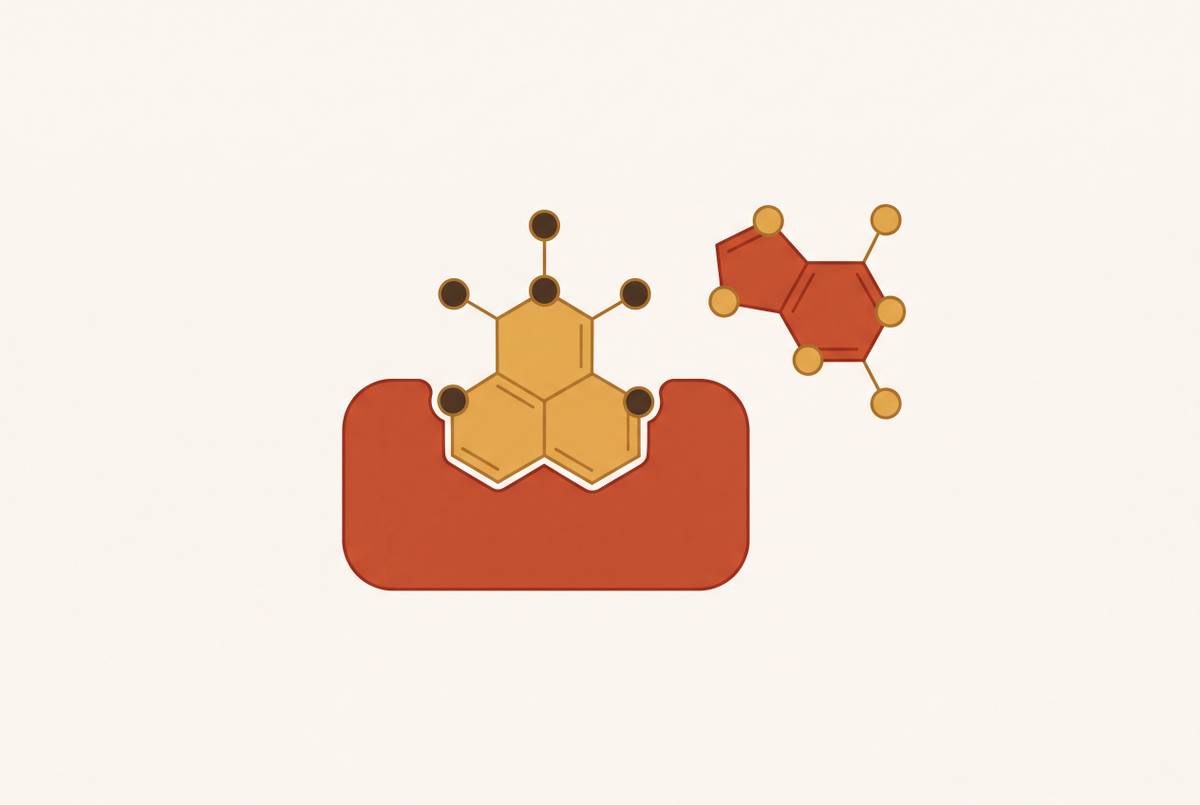
Caffeine triggers the adenosine rebound that causes the crash. Caffeine works by blocking adenosine receptors, but adenosine, the molecule responsible for the drowsy pressure to sleep, keeps accumulating the entire time those receptors stay blocked. When caffeine finally clears your system, the adenosine that built up floods the newly available receptors all at once, and you get a sharp energy trough. If you're a slow metabolizer, that trough arrives later in the day, often close to bedtime, so your wind-down period turns into a second wave of fatigue colliding with a body still trying to process the morning's dose.
The stakes compound over time. A prospective cohort study following participants for 7.5 years found that slow metabolizers of caffeine were substantially more likely to develop albuminuria, hyperfiltration, and hypertension with heavy coffee intake, effects that did not appear at the same frequency in fast metabolizers. That finding illustrates a magnitude of difference between genotypes rather than a verdict on any individual's health, but the direction of the effect is consistent with everything the cortisol and adenosine mechanisms above would predict.
How genotype splits cognitive outcomes in measurable, domain-specific ways
The cognitive effect of caffeine doesn't just shrink for slow metabolizers. It splits by domain, by dose, and in some cases by direction. That makes genotype essential context for anyone using caffeine as a tool for mental performance. A crossover study out of the University of Kent, led by Carswell and colleagues and published in the European Journal of Applied Physiology, found that caffeine boosted fast metabolizers' performance on the psychomotor vigilance test, a standard measure of sustained attention, substantially more than it helped slow metabolizers. Slow metabolizers in that study showed effects on reaction time and attention lapses that were close to zero, and in some cases slightly negative.
A 2025 study out of St. Mary's University, led by Kapellou and colleagues and published in the Journal of Psychopharmacology, added a layer of nuance you couldn't get from the Kent study alone. Among moderate caffeine consumers, fast metabolizers outperformed slow metabolizers specifically on executive function. Among high caffeine consumers, the pattern reversed on a different measure: slow metabolizers outperformed fast metabolizers on social cognition, specifically emotion recognition. That reversal matters because it rules out a simple more-caffeine-is-worse story for slow metabolizers. You need to match dose to genotype and to the task at hand; you can't just tell slow metabolizers to take less.
That same research found a dose-specific pattern for executive function. Moderate doses appear to offer fast metabolizers a cognitive benefit without tipping into withdrawal, anxiety, or sleep disturbance, while for slow metabolizers, steady-state plasma concentration may already be high enough to discourage further intake without ever crossing the threshold needed to improve executive function. That helps explain a behavioral pattern replicated across multiple studies: fast metabolizers instinctively consume more caffeine than slow metabolizers. Without knowing their own genotype, most people calibrate by trial and error. A lot of slow metabolizers overshoot their dose chasing a benefit that was never going to arrive that way.
Where the research is genuinely uncertain
CYP1A2 genotype shapes caffeine response, but the evidence can't yet support precise, one-to-one predictions about any individual's cognitive performance, and researchers in the field say so openly. Ahmed El-Sohemy, a nutrigenomics researcher at the University of Toronto, pointed out that the St. Mary's study did not include rs762551, one of the most well-established genetic markers for caffeine metabolism. Studies in this field are often testing different SNPs entirely, so comparing across them is unreliable. The Kapellou review itself noted that genetics studies on habitual caffeine intake and cognitive performance remain limited and produce mixed results: some find a relationship in certain genotype groups, others find no significant gene-by-caffeine interaction. Exercise research adds another layer to the puzzle. Carswell and colleagues found no gene-caffeine interaction in cycling time-trial performance for either CYP1A2 or ADORA2A genotype, and Masters and colleagues found higher plasma caffeine concentrations in AA allele carriers but no corresponding gene-caffeine interaction in time-trial performance. Genotype's predictive power looks domain-specific: stronger for cognition, weaker or absent for gross physical output.
None of that uncertainty dissolves the underlying biology. CYP1A2 genotype measurably shifts the probability distribution of how someone responds to caffeine. If you don't know your genotype, you just accept more variance in your outcomes; the genetic effect still applies. Genetics still matter here, but caffeine alone is an unreliable way to land on the upside of that distribution.
A Different Strategy for Slow Metabolizers
For slow metabolizers, the core issue is how caffeine's prolonged presence in the bloodstream interacts with cortisol signaling, adenosine rebound, and sleep architecture, three separate problems that a smaller dose only partially addresses. Prolonged cortisol elevation directly undercuts the very outcome caffeine is supposed to deliver, since elevated stress degrades cognitive ability, sleep quality, and psychological well-being at the same time, creating a loop where the stimulant and the stress response work against each other.
The rebound adenosine crash compounds the problem because it lands later in the day for slow metabolizers, interfering with sleep onset and sleep quality, which then drags down the next day's baseline cognition before you even pour a single cup of coffee. Sleep functions as the recovery mechanism that sets the ceiling on daytime mental output, not a separate category from it. Fast metabolizers face a related but distinct version of the same trap: because their bodies clear caffeine quickly, they tend to consume more of it to sustain the effect, which raises cumulative cortisol load over the course of a day and risks the same crash-and-jitter cycle through volume.
The shared answer for both groups is a formulation that works directly on the cortisol and adenosine mechanisms responsible for the problem, and that points toward a body of adaptogen and amino-acid research built on exactly that premise.
What the evidence says about ingredients that address the underlying mechanisms caffeine leaves exposed
Each mechanism that makes caffeine difficult for slow metabolizers, cortisol amplification, adenosine rebound, and disrupted sleep, has a well-studied nutritional counterpart that acts on the same pathway without depending on how fast any individual clears caffeine from their system.
L-theanine paired with caffeine, the combination naturally present in matcha, works as an acute modulator. L-theanine slows caffeine absorption, which tends to reduce jitters and gastrointestinal upset compared with coffee. A 2025 double-blind crossover study out of the University of Peradeniya, led by Nawarathna and colleagues and published in the British Journal of Nutrition, found that the L-theanine-caffeine combination significantly improved hit rate, target-distractor discriminability, and reaction time compared with placebo in sleep-deprived young adults. At the neurophysiological level, a dose of just 50 mg of L-theanine increases alpha-wave production in the cerebral cortex within an hour, with effects persisting well beyond that window, the neurological signature of relaxed alertness. Matcha gives you roughly 50 to 70 mg of caffeine per cup alongside that L-theanine, so the protective ratio is built into the source itself, but coffee never pairs the two compounds to begin with.
Ashwagandha addresses the cortisol chain directly. A 2025 systematic review and meta-analysis in BJPsych Open, led by Bachour and colleagues, confirmed that ashwagandha supplementation is safe and effective for reducing stress and anxiety in adults, and it produced a statistically significant reduction in cortisol levels. A 2026 randomized controlled trial with 126 participants averaging 34.8 years old, published in Medicine, found that Perceived Stress Scale scores dropped significantly from baseline to day 60, with sleep quality, psychological well-being, and serum cortisol all improving alongside it, a direct chain running from cortisol suppression to daytime performance to better sleep. Ashwagandha's GABAergic activity, the same pathway some sleep medications target, extends its relevance beyond the daytime cortisol problem into the nighttime recovery window as well.
Rhodiola rosea functions as a faster-acting stress buffer. It enhances stress resilience through adaptogenic modulation of the HPA axis and monoaminergic signaling, and its onset distinguishes it from the adaptogens above: benefits for cognitive performance under stress appeared within the first two weeks of supplementation, making it useful during acute stress periods.
Bacopa monnieri supports memory consolidation and sleep through the same HPA-axis pathway. A 2026 randomized controlled trial led by Gowda and colleagues, published in Current Research in Complementary & Alternative Medicine, linked a standardized Bacopa extract to a substantial reduction in serum cortisol, improved self-reported sleep quality, a 28-minute increase in total sleep time, and meaningful gains in sleep efficiency, all through adaptogenic action on the HPA axis.
Lion's Mane, or Hericium erinaceus, offers a more preliminary case for neuroplasticity support. Preclinical research shows that the hericenones and erinacines it contains can promote nerve growth factor synthesis, which supports neuroplasticity. Human evidence remains mixed: an 18-person 2025 Frontiers in Nutrition trial of adults aged 18 to 35 found no significant effect on global cognitive function from a single dose, though participants did show improved performance on the pegboard test, suggesting any benefit may be task-specific. Chronic use shows a more consistent signal. Research by Mori and colleagues found cognitive improvement after 16 weeks of daily supplementation in older adults, but performance declined once the treatment period ended, showing the need for sustained use. The Alzheimer's Drug Discovery Foundation has noted that larger, longer trials are still needed, making Lion's Mane a promising long-game ingredient for the future.
The inconsistency running through caffeine research and everyday experience points to a deeper lesson: individual biochemistry, not willpower or brewing method, is the variable most conventional stimulant advice leaves out, and understanding your own genotype is the first step toward replacing guesswork with something closer to science. That principle is also why a clinically formulated mental performance shot like Magic Mind offers multiple caffeine levels, Free, Original, and MAXX, plus a separate Sleep formula, rather than prescribing one dose for every metabolizer type. For slow metabolizers specifically, the prolonged cortisol signal and late-day adenosine crash carry real physiological costs, so sustaining energy without the anxiety or sleep disruption that raw caffeine alone produces matters: Magic Mind's formulation stacks ingredients like these beyond caffeine alone to dampen the stress-response cascade that single-molecule stimulants tend to amplify.
What Knowing Your Metabolizer Status Changes
Knowing whether you carry a fast or slow CYP1A2 genotype won't hand you a precise prescription, but it gives you a framework that replaces trial-and-error with informed experimentation. Fast metabolizers, the AA genotype, get a real and measurable cognitive benefit from caffeine, particularly for sustained attention and executive function at moderate doses. The main risk for this group is escalating intake over time and the cumulative cortisol cost that comes with higher volume, which makes pairing caffeine with cortisol-modulating adaptogens like ashwagandha or Rhodiola a smarter move than simply raising the dose further.
Slow metabolizers, carrying the AC or CC genotype, don't need to abandon caffeine. They need to change the delivery context: lower-caffeine formats, the L-theanine buffer already built into matcha, and cortisol-dampening ingredients that blunt the prolonged stress-response window caffeine triggers in their systems. Sleep-supporting adaptogens like ashwagandha and Bacopa address the nighttime consequences of slow clearance at the source rather than papering over them the next morning with another cup of coffee.
For anyone who doesn't yet know their own genotype, which describes most people, the same logic still applies. A formulation built to address cortisol, adenosine modulation, and neuroplasticity at once is robust to metabolizer status in a way that caffeine by itself can never be. It hedges the genetic uncertainty. Once you know your genotype, you match the stimulant strategy to it, choosing not just the dose but the compound stack, so formulations built around absorption efficiency and ingredient synergy carry more weight than marketing claims about any single ingredient. One-size caffeine advice fails because it ignores the genetic architecture that decides whether a given dose sharpens your focus, stirs up anxiety, or follows you into a disrupted night's sleep. Magic Mind's approach, clinically dosed ingredients in bioavailable form across the Free, Original, and MAXX variants, plus the separate Sleep formula, works as a direct product expression of that same conclusion: match the compound to the biology, not the other way around.
Sources
- Habitual caffeine intake, genetics and cognitive performance - Angeliki Kapellou, Leta Pilic, Yiannis Mavrommatis, 2025
- The effect of caffeine on cognitive performance is influenced by CYP1A2 but not ADORA2A genotype, yet neither genotype affects exercise performance in healthy adults
- Habitual caffeine intake, genetics and cognitive performance
- The Effect of CYP1A2 Gene Polymorphisms on Caffeine Pharmacokinetics and Exercise Performance in Male Recreational Athletes - Masters - 2026 - European Journal of Sport Science - Wiley Online Library